Where is the Songs of Glimmerwick song list?
Not on this page. Named here: Song of Tilling, the dead-wood chant (menu title incomplete), and Melody of Stones. Note sequences stay unpublished because the prompt changes every attempt.

Songs of Glimmerwick songs are the spells. You carry a flute and a songbook, pin the song you are learning, and play a short rhythm prompt until a score threshold lets you cast it with a button. Steam. Verified October 3, 2026.
| Fact | Detail |
|---|---|
| Instrument | Flute, fitted by the maker near Whisk. The songbook holds the spells |
| Prompt | Short rhythm phrase. Hold notes. Pattern is not stable across attempts |
| Threshold | Clear it and later casts can be a click. A near-perfect score can strengthen a spell or make it spend less mana |
| Pin | Pin the spell you are drilling so the book stays on that song |
| Mastery | First mastery level: cast anywhere you have mana, including insta-cast from the spell bar |
| Controller | X opens spells, D-pad selects. A picks a target, X confirms that target |
| Platform | Windows PC (Steam) |
| Unlisted | Full song list, mana costs per song, note charts |
Songs of Glimmerwick spellcasting is not a hotbar of fireballs. Music is the magic. At first, every cast is you playing a short series of notes on the flute. After you are good enough, the same song becomes a button.

Official effects, not a guessed spellbook: a song can speak with trees, make a tool work by itself, raise the ground so you can pass, and call clouds for rain. Those are the reasons the garden and the island both care about the flute. Which menu entry does which job is only safe where a lesson names it. This page names three. The rest stay TBA instead of being copied from a fan chart.
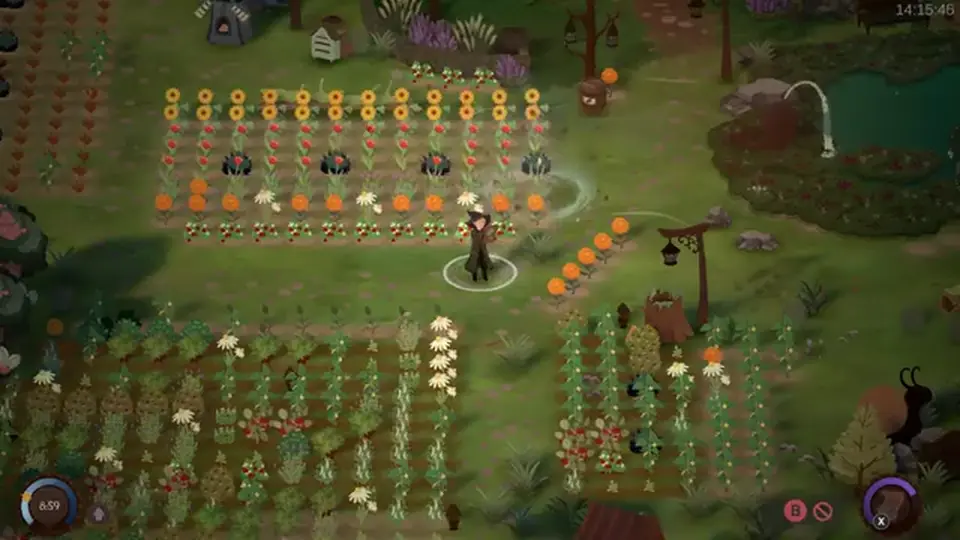
Tools can be enchanted from the first day, which is why a till does not mean you stand on the hoe. You spend mana, confirm the order, and the fork or the chant does the labor. That is spellcasting used as a chore, not a fight. There is no weapon rarity attached to the flute.
The maker’s questions pick a flute that suits you. That is an instrument, not a warrior or mage path. Steam does not list a class-change system. Bring the flute they hand you. A later festival can award another instrument; the name of that prize stays off this page until it is checked in a menu, not a caption.
Songs of Glimmerwick flutes only cast what you have been taught. An empty spell list on day one is correct. The Dean’s garden lesson is the first real entry. Class adds the next. The practice rules are the same for both, and they are the next section.
The minigame is optional in the sense that you can turn it down. It is not optional in the sense that a brand-new song casts itself. You either play the prompt, or you use the accessibility setting that plays it for you, until the threshold is met.

| Situation | Action |
|---|---|
| First miss | Hold the note. Tapping through the prompt is the usual failure |
| Second try | Expect a different pattern. Do not replay a written sequence |
| Score too low | Retry. One star can be enough to start tilling; a higher band unlocks more of that spell |
| You hate rhythm games | Accessibility options trivialize the prompt and still allow the threshold rewards |
| Class is today | Use the rear chambers. They slow time so practice does not burn the day |
| You keep opening the wrong song | Pin the one you are learning in the songbook |
You practice to a score threshold. After that, you can cast with the click of a button. A near-perfect score unlocks a slightly stronger version of the spell or, in some cases, a version that uses less mana. Those are the two official outcomes. Exact point values shift with the prompt, so a single demo try (a one-star around a few hundred points, with a higher band a short step above it) is not a number to grind toward on every song.
Potion brewing is a different minigame with its own threshold and its own quality scale. Do not mix the two UIs. Coffee, which makes you run faster, is a potion example, not a flute song. Course context: classes.
Behind the music classroom are chambers that slow time. Melody of Stones is the song those rooms are built for on the first class day: boulders in the garden, practiced at least a couple of times before the next meeting. Song of Tilling is usually learned outdoors, on the bed itself, before you ever see that room. If you are failing it in the garden, you are spending real mana and real daylight — finish the confirm you need, then drill the next song indoors.
Pin stays on while you drill. Mastery is what takes the pin’s job away, and it is a separate step.
Mastery is the line between “play the flute every time” and “press the spell.” Songs of Glimmerwick songs do not all cross that line at the same hour, but the rule is one sentence.
Once a song reaches the first mastery level, you can cast it anywhere you still have mana. The cast stops being the full practice phrase and becomes an insta-cast from the spell bar. That matches the official line: after the score threshold, a click is enough. If the bar will not fire, you are either short on mana or the song never cleared the threshold. Pin will not bypass a threshold you skipped.
Controller path after mastery: press X to open spells, D-pad to the song you want, then use it. A targeted chant (dead wood, a specific tree) adds a step — A selects the target, X confirms. Plot spells add RB for layout and LB for size before the confirm. Those modifiers are not mana buttons. They choose where the charm lands.
It does not print the note letters, reveal every song in the book, or raise a hidden combat rank. It does not turn friends into a dating system. It does not require a code. A higher mastery inside the music minigame is also one of the official ways to earn experience, alongside quests, a once-a-day bathhouse soak, potion mastery, and a few curiosities. Spend that experience on the skills tree when the menu offers it.
If insta-cast works in the garden but the soil still will not turn, the failure is the till confirm, not the song rank. That confirm is the whole next page.
Matched by build plan, shared topics, and guide progression — not random related links.
Mana is the daily bottleneck. The clock freezes at night and during important events, and staying out late does not respawn you. An empty mana bar does stop the next charm.
| Need | Do this |
|---|---|
| Open the bar | Controller X, then D-pad. Keyboard follows the on-screen spell key |
| Till a bed | RB layout, LB size, then confirm. The fork moves after confirm |
| Cut dead wood | Select the chant, A on the tree, X to confirm. Living trees are protected |
| Refill a little | Eat a snack. Grown food can return mana |
| Refill a lot | Sit in the bathhouse steam. Swimming needs water wear; the steam does not |
| Raise the cap | An early license skill offers more mana, better potion scores, or seeds from harvests |
| Stop wasting it | Do not retill because the plots were large. Basil wants small plots |
On a controller, A selects the thing the spell should hit. It does not grant mana, and it does not replace X as the spell-menu button. Players who mash A and never see the song list are on the wrong face button. Open with X first. Then aim.
If the lesson text says you are drained, stop charming and eat. Running the hoe “one more time” on an empty bar does nothing useful. The bathhouse on campus is the longer refill, and the official experience grant for soaking is once per day — the mana from the steam is the part you feel immediately.
Mouse planting in the opening garden is right-click to choose, then Space to confirm. Different hardware, same rule as the controller’s select-then-confirm till. Whichever you use, write nothing down about note letters. The next practice will change them.
Put a working song on a bed next. Gardening is the till, the scythe, and the well. This page stays on the flute.
Only songs a lesson speaks in full get a row. Everything else is TBA on purpose. Songs of Glimmerwick songs are not a scraped list.
| Name used here | What it does | Where you learn it |
|---|---|---|
| Song of Tilling | Charms the hoe. You pick layout and size, confirm, and the fork tills | Dean, at the botanical garden |
| Dead-wood chant | Cuts felled or dead wood. Will not touch living trees | Same garden lesson, second spell. Menu title not fully captured |
| Melody of Stones | Makes boulders in the garden manageable | First music class, then the time-slow chambers |
| Rain, tree speech, raise ground | Official effect list, not three menu titles | Later lessons. Do not invent the spell names |
Calling rain, talking to trees, and raising ground are confirmed capabilities. They are not confirmed song titles. A fan page that assigns those effects to a four-letter sequence is guessing. When a spellbook capture exists, this table can grow. Until then the honest cell is TBA.
Weeds are the negative case: they are highly resistant to magic. No song replaces the scythe you buy in town. If a guide tells you to play a weed song, it is ahead of the lessons.
Classes exist to introduce a mechanic, a festival chore, or a recipe. Some of those introductions are songs. Show up, pin the new one, and use the chambers. The walkthrough orders the first week of those lessons. The demo stops around Song of Tilling plus Melody of Stones.
Next: spend Song of Tilling on a real bed in gardening, or see which morning teaches Melody of Stones in classes.
Not on this page. Named here: Song of Tilling, the dead-wood chant (menu title incomplete), and Melody of Stones. Note sequences stay unpublished because the prompt changes every attempt.
After the score threshold, insta-cast from the spell bar. Accessibility settings can trivialize the prompt if you still want those thresholds. A brand-new song does not start on the button.
X opens the list. The D-pad selects. A aims at a target such as a dead tree, and X confirms that target. RB and LB set plot layout and size for a till.
Casting spends mana, and a near-perfect practice can unlock a version that spends less. Per-song numbers are TBA. Refill with a snack or bathhouse steam.
October 3, 2026
Matched by build plan, shared topics, and guide progression — not random related links.